Tuesday, June 1, 2010

Coda: Louise Bourgeois, Visionary and Influential Artist, Dies in Manhattan at 98

Louise Bourgeois in her Brooklyn studio on Dean Street

Louise Bourgeois, the French-born American artist who gained fame only late in a long career, when her psychologically charged abstract sculptures, drawings and prints had a galvanizing effect on the work of younger artists, particularly women, died on Monday in Manhattan, where she lived. She was 98.


The cause was a heart attack, said Wendy Williams, managing director of the Louise Bourgeois Studio.

Ms. Bourgeois’s sculptures in wood, steel, stone and cast rubber, often organic in form and sexually explicit, emotionally aggressive yet witty, covered many stylistic bases. But from first to last they shared a set of repeated themes centered on the human body and its need for nurture and protection in a frightening world.

More from the NY Times obituary here.

2008 Posting here at Deep in the Heart of Brooklyn about Ms. Bourgeois's show at hte Guggenheim and former studio on Dean Street here.

Wednesday, May 19, 2010

The Stickey Wicket on East 16th Street

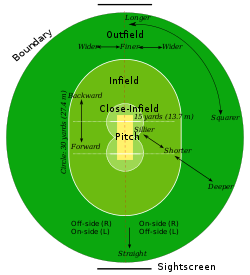
The objective of each team is to score more runs than the other team and to completely dismiss the other team. In one form of cricket, winning the game is achieved by scoring the most runs, even if the opposition has not been completely dismissed. In another form, it is necessary to score the most runs and dismiss the opposition in order to win the match, which would otherwise be drawn.  A cricket match is played between two teams (or sides) of eleven players each on a field of variable size and shape. The ground is grassy and is prepared by groundsmen whose jobs include fertilising, mowing, rolling and levelling the surface. Field diameters of 137–150 metres (150–160 yd) are usual.The perimeter of the field is known as the boundary and this is sometimes painted and sometimes marked by a rope that encircles the outer edge of the field. The Laws of Cricket do not specify the size or shape of the field but it is often oval – one of cricket's most famous venues is called The Oval.

On East 16th Street in Flatbush, a few young boys are playing cricket in the street, watched over by a dad. Pure Brooklyn, the kids, West Indian, South Asian and white, take turns wielding the cricket bat with great seriousness, laughing with glee as they get the occasional hit. No doubt the asphalt streets provide a stickier  wicket than a wet and drying pitch, which makes the ball'spin and bounce sharp and unpredictable. But it is a school day afternoon and the Flatbush street is far from the weekend cricket games played at Prospect Park, or Staten Island's New Dorp near Miller Field (which was a keystone to Joseph O'Neill's wonderful novel, Netherland). Here you can imagine the game that may have been played  in British 18th century New York. Now, played again widely in the city, taught by immigrant kids to their friends,not just a weekend team sport with crisp and gleaming white uniforms on the fields of Prospect Park, but now, also a street game and urban sport, evolving on the streets of Brooklyn.

Wednesday, May 5, 2010

Coda: Reflection on "The Lindsay Era" in NYC (aka "Fun City")

 --Lindsay Campaign Sticker
It was a return to another era in NYC politics at the Museum of City of New York Tuesday night when politicians, journalists and historians gathered to assess the meaning, the impact and the successes and failures of the administration of John Vliet Lindsay, 103rd Mayor of the City of New York from 1966-1973.  Mayor Lindsay (or “Lindslee” as he was chided by many disaffected New Yorkers) came in brimming with ideas, energy and enthusiasm, and cadres of young activists seeking to revitalize the political scene and New York City under his leadership.   The event was moderated by Sam Roberts of the New York Times (and editor of the companion volume to the new exhibit at the Museum of the City of New York, “America’s Mayor: John V. Lindsay and the Reinvention of New York.”)  Roberts opened the symposium by asking to identify audience members who had worked in the Lindsay administration: a forest of hands filled the air.  This lent a certain clubby quality to the event.  In addition, the panel included former Congressman Major Owens, former Public Advocate Betsy Gotbaum, who held positions in the administration and Jay Kriegel, Mr. Lindsay’s Chief of Staff.   They were all vocally supportive of the energy and vision of Mr. Lindsay’s mayoralty, acknowledging that the strikes and widespread political unrest were circumstances beyond his control that may have played a role in derailing many of the administration’s efforts at implementing new ideas.  Jerry Kretchmer, former Manhattan Assemblyman, campaign aide to Robert F. Kennedy and environmental commissioner for the Mayor, in the audience, took umbrage with suggestions that it was a failed administration. They took risks, made many advances, but were hobbled by the political climate, the unions, and other issues beyond their control. But at least they were willing to try new things.
 
Lest it devolve into a hagiography, journalists Gabe Pressman, Pete Hamill and Jeff Greenfield, and especially author and U. Massachusetts professor Vincent Cannato, added some much needed brio to the discussion, taking a more balanced view on the Lindsay administration, pointing out the unique strengths of the activist, media-genic Mayor and his progressive administration but also its weaknesses, failures and shortcomings, including the operational (failure to plow  out Queens following the blizzard, the attempts to dislocate Queens homeowners at the behest of developers), the political (failure to intervene in the Ocean-Brownsville community control situation that led to teacher strikes and political unrest) and the simply tone deaf (failure to recognize the identity and political clout of the working class and unionized white ethnic voters, which resonated with suggestions of elitism.)  Mention was only made en passant of the Knapp Commission’s police corruption investigations which in fact, according to news reports at the time, back In the day,  brought a panelist and mayoral aide to the brink of an indictment for allegedly changing his testimony regarding the handling of the early reports of corruption.  (When Officers Serpico and Durk reported corruption to Mayoral Aide Kriegel, did he or didn’t he tell the Mayor?-- Sources indicate that the administration, fearing possible summer unrest in minority communities, chose not to challenge the NYPD establishment at the time.)
 
After  the symposium, the opening reception at the Museum gave a much more nuanced, heavily documented, and fascinating overview of all facets of the Lindsay years. At the same time, it provides a wonderful flavor of that era in New York City. An incredible amount of political activity, cultural events, and rampant creativity.   Political and cultural memorabilia and tzatzches,  newspaper headlines and magazine covers, movie posters, layoff letters to teachers in Ocean Hill-Brownsville dispute, photos, books, municipal government handbooks and documents – the exhibit does a fabulous job of exploring the nooks and crannies of the era. I loved the recording of the Mayor’s Inner Circle dinner song, I believe with Florence Henderson, that went something to the effect of “I go to bed every night/wondering what the hell we did right!/will there be another strike? ”
 
I was not aware that his administration was responsible for formalizing the creation of “SoHo” as a mixed residential commercial district, or the creation of Westbeth Housing. And the efforts that the administration made for popularizing art and culture, with “Arts and Crafts Mobiles” and movies and theater in the parks, and the expansion of NYC as a filmmaking center, helped to transform the city. The panelists addressed with conflicting views the complexities of the Mayor’s support for the expansion of welfare and social services which showed him as an activist with a heart, but at the same time, helped to create deficits that led to a fiscal crisis. “America’s Mayor” gives a colorful and intriguing view of New York City during a tumultuous and exciting era, of a rara avis today -- a Liberal Republican (who later became a Democrat.). The exhibit, from this perspective, doesn’t attempt to answer questions about “success” or “failure” but it does help to fill out, with broad historical and cultural brushstrokes, a more defined portrait of the man, John V. Lindsay, whose bio had begun to fade a bit into obscurity.  
 
I was in my young teens in those years, but in looking back through the lens of “America’s Mayor,” you can’t help but to love New York City more and more, where we are, where we have come from, and hopefully still where we may be headed.
 
America’s Mayor: John V. Lindsay and the Reinvention of New York City at the Museum of the City of New York, May 5 through October 3
 
http://www.mcny.org/exhibitions/current/Mayor-John-Lindsay.html

Tomorrow, Thursday, on WNET 8 PM--Fun City Revisited--The Lindsay Years

--Brooklyn Beat

Tuesday, May 4, 2010

America's Mayor: John V. Lindsay and the Reinvention of New York


America’s Mayor: John V. Lindsay and the Reinvention of New York examines the controversial tenure (1966-1973) and dramatic times of New York’s 103rd mayor. The exhibition presents John V. Lindsay’s efforts to lead a city that was undergoing radical changes and that was at the center of the upheavals of the 1960s and 1970s; it highlights Mayor Lindsay’s ambitious initiatives to redefine New York City’s government, economy, culture, and urban design. Through his outspoken championship of city life, commitment to civil rights, and opposition to the Vietnam War, Lindsay emerged as a national figure in a troubled and exhilarating era. The exhibition also explores the costs of his approach, including growing criticism from disaffected voters and an increasingly out of control city budget.

Lindsay was born in New York City on West End Avenue to George Nelson Lindsay and the former Florence Eleanor Vliet. Contrary to popular assumptions, John Lindsay was neither a blue-blood nor very wealthy by birth, although he did grow up in an upper middle class family of English and Dutch extraction. Lindsay's paternal grandfather migrated to the United States in the 1880s from the Isle of Wight,and his mother was from an upper-middle class family that had been in New York since the 1660s. John's father was a successful lawyer and investment banker, and was able to send his son to the prestigious Buckley School, St. Paul's School and Yale, where he was admitted to the class of 1944 and joined Scroll and Key.

With the outbreak of World War II, Lindsay completed his studies early and in 1943 joined the United States Navy as a gunnery officer. He obtained the rank of lieutenant, earning five battle stars through action in the invasion of Sicily and a series of landings in the Pacific theater.After the war, he spent a few months as a ski bum and a couple of months training as a bank clerk before returning to Yale, where he received his law degree in 1948, ahead of schedule.


Back in New York, Lindsay met his future wife, Mary Anne Harrison, at the wedding of Nancy Bush (daughter of Connecticut's Senator Prescott Bush and sister of future President George H.W. Bush), where he was an usher and Harrison a bridesmaid. A resident of Greenwich, Connecticut and a graduate of Vassar College, Harrison was a distant relative of William Henry Harrison and Benjamin Harrison. They married in 1949. That same year Lindsay was admitted to the bar, and rose to became a partner in his law firm four years later.

When he came into office, Mayor John V. Lindsay had a dream to reinvent the city—to bridge the income and affordability gap, bring racial minorities into government, integrate neighborhoods, empower communities through decentralization, impose strategic urban planning to spare the environment, and make cities more livable. Which of these dreams became a reality and how do those changes affect us today?

The exhibition, which opens to the public on May 5, is presented in cooperation with the Municipal Archives, is accompanied by a book of the same title edited by Sam Roberts of The New York Times and co-published by Columbia University Press and the Museum of the City of New York (May 2010), as well as a public television documentary presented by WNET.ORG.

Tonight at the Museum of the City of New York, DITHOB will be attending a symposium (sorry, sold out) moderated by Sam Roberts, and a panel of NY authors, journalists and political figures (Pete Hamill, Major Owen, Vincent Cannato, Jeff Greenfield, Jay Kriegel, and Gabe Pressman.)


More on the exhibit at the Museum of the City of New York

Monday, May 3, 2010

The City of Two Peaces: Jordi Savall Performs "Jerusalem" at Lincoln Center & WQXR-FM


Jordi Savall performs "Jerusalem: City of Heavenly and Earthly Peace" tonight at 7 PM at Lincoln Center in a performance that wil be broadcast live on WQXR-FM, 105.9 FM in NYC, and on the web. Savall has been one of the major figures in the field of early music since the 1970s, largely responsible for bringing the viol (viola da gamba) back to life on the stage. His repertory ranges from Medieval to Renaissance and Baroque music. His co-performer and spouse, Montserrat Figueras, has a voice that, in a word, transports. Jerusalem, City of Heavenly and Earthly Peace, from Catalan early music director and performer Jordi Savall, is a performance of religious songs, texts, chants and instrumental arrangements used to explore the way cultural traditions of the three major religions have shaped the history of Jerusalem, from biblical times to the present day.

A youtube sample from Cancion Sefardi.

Jordi Savall

WQXR-FM website here

From WQXR website: "Joined by his wife and collaborator, soprano Montserrat Figueras, as well as the musicians of his own ensembles, Hesperion XXI and La Capella Reial de Catalunya, Savall charts Jerusalem's history from 1200 BC to the present day..The performance comes at a time when Israelis and Palestinians are at deep odds over political borders and settlement activities in East Jerusalem. But as the liner notes to the lavish 2008 recording of Jerusalem explain, etymologists have translated the Hebrew name Jerusalem as "the city of the two peaces," a reference to both "heavenly peace" and "earthly peace." The former was proclaimed by the prophets who lived in or visited the city, while the latter was sought by the political leaders who have governed the city throughout its five thousand years of documented existence."

More from wikipedia on Jordi Savall

Jordi Savall's official site

Friday, April 30, 2010

Never, Too Late

Dreaming of the power to understand
Before it is too late
That which can be done
And that which can’t be undone
First taking soft steps across the forest carpet
After ducking the river tumble
Until the night comes
And the day that is finally done
Itself no longer may be undone
But we gaze at the willows and imagine
Something
Before it slips from our grasp
Text and painting by Anthony M. Napoli

Wednesday, April 21, 2010

Avenue of the (Great) Americans


Photos by Brooklyn Beat

Maybe it is a reflection of the creative and generative powers of builders and architects, such as Ayn Rand's Howard Roarke in "The Fountainhead" who was willing to destroy a building he designed rather than have it, and his pride of creation, spoiled by "the committee."  We are accustomed to seeing the naming of buildings, whether egocentric, i.e.,  "Trump/Babel" or whimsical "The Glenwood" on a treeless street in Manhattan.

But on Avenue K and East 13th Street in Brooklyn, the buildings bear the names of some great Americans. Was it a builder or designer who took great pride and pleasure in the possibilities offered in the United States?  Or a former history teacher from nearby Midwood or Murrow who came into some money years ago and decided to erect some buildings, and in doing so decided to honor the names of Great Americans of the past?  Anyone's guess. But the memories of Lincoln, Grant and Franklin loom large on Avenue K near Coney Island Avenue.

--Brooklyn Beat

Thursday, April 15, 2010

Thursday, April 8, 2010

New York City Invaded By Pixels

It looks like a Q-ball , a type of non-topological soliton,  entered the Earth right over New York City and rendered it whacko. Or maybe it is fall out from -- yes, the CERN Collider..  Patrick Jean's video   http://www.youtube.com/watch?v=rcXtT3rZcqg&feature=player_embedded , making its way around the web, gives a cool and skewed look at pixillating rhythms in a transitionally Lego world. Avanti!

Update On the Dunes

Update from the Isle of Coney -- Well, for what almost passes as controversy on this site, when Deep in the Heart of Brooklyn apparently made the grave error of taking a walk in Coney Island on Monday, and not this past Saturday or Sunday when I was out of town, it appeared at that time that things might be slow for at least part of this summer On the Dunes in Coney Island..  Well, happily, not so...

Coney Island Fun Guide Reports: "If you had come on the weekend, the Boardwalk would have been open! I work in Coney Island and want to reassure everyone that Cha Cha's, Ruby's, Lola Star and the other businesses on the Boardwalk as well as the rides and games will indeed be open this summer.


As Ruby's host explained, one section of the Boardwalk between Stillwell Ave & W 12th is temporarily closed this week only. Work continues on the beach side of the Boardwalk.

Yes, at long last construction is now underway in Coney, including the new Luna Park with 19 rides slated to open on the former Astroland site on Memorial day weekend. The Ringling Circus returns in June. It's shaping up to be a great season. The Cyclone and Wonder Wheel are among the 40 rides currently open for business. Come on out and enjoy! Check the Coney Island Fun Guide for schedules and detailed info..."


Thank you for the update! Nevertheless, based on Monday's somewhat luckless visit, Brooklyn Beat still asserts that it would have been helpful and just plain nice for him, as well as the turistas, to know that, faced with gates and construction and No Entry signs, things were not to remain as they seemed at mid-day on a gorgeous and warm Monday. But anyway, you simply cahn't always get what you want....Still, so there you have it, Coney Island--still cool, still happening, still there. Go for it! See you there!

More info here 

"On the Dunes" by Donald Fagen
Drive along the sea

Far from the city's twitch and smoke
To a misty beach
That's where my life became a joke

On the dunes
On the dunes
(Became a joke on the dunes)
Where rents are high
And seabirds cry
On the dunes

As you spoke you must have known
It was a kind of homicide
I stood and watched my happiness
Drift outwards with the tide
On the dunes
On the dunes

(Homicide on the dunes)

It wasn't fair
It's brutal there
On the dunes
Pretty boats
Sweeping along the shore
In the faltering light
Pretty women
With their lovers by their side
It's like an awful dream
I have most every night

In the summer all the swells
Join in the search for sun and sand
For me it's just a joyless place
Where this loneliness began
On the dunes

On the dunes
(Loneliness on the dunes)
I'm pretty tough
But the wind is rough
On the dunes
--Donald Fagen, "On the Dunes" from  his great solo album,. Kamakyriad

--Brooklyn Beat

Tuesday, April 6, 2010

Coney Island: In Transition

Despite the intermittent media coverage regarding pending development,   it was still a bit of a surprise, visiting Coney Island yesterday,  to see the huge swath of the Boardwalk, from Stillwell Avenue east, fenced off, shops closed, as reconstruction of the Boardwalk, and presumably further development, commences.

While it was still early in the season, only a couple of food stands were open, west of Stillwell. I didn't realize that the impact of the development would be felt so soon, it seems clear that that the fenced off area precludes business in this section over the summer, if, as the sign indicates, work will be completed in Fall 2010. 

Update: Good news --I am pleased to report that shortly after this item was posted, an update was received from Ruby's, among our favorite watering-holes-by-the-water :   

Ruby's reports that, happily,  "while there is a section of the boardwalk being redone. Ruby's is open and doing well. The section that is being worked on has 2 parts - the entire section of boardwalk is closed from 6:30 am - 2 pm mon- fri only so they crane can hoist the concrete pieces of the boardwalk over the buildings and dropped in place. Ruby's is open 7 days a week and going strong. There is a section of the boardwalk - Close to the water section where benches are- that is fenced off. That section is having extensive repair work done and is closed until Memorial day weekend. The entire boardwalk has been under repair for over a year and will be completed 2011."

While it is possible to walk the length of the shore, much of the trip to Brighton Beach would have to be made either on the street or on the sand, since the Boardwalk no longer serves as a thoroughfare.  We took a walk out on the pier, still accessible, and walked on the Boardwalk to West 29th Street.  But there is no doubt that major changes are coming. One old timer was overheard observing that tourists are already appearing looking for "the new hotel."   While some of its "42nd Street-by-the-Sea" charm may be in flux, for better or for worse, Coney Island will always remain one of the most vibrant and amazing places to experience nature, and New York,  in any season. 

One more note from Deep in the Heart of Brooklyn, a long-time Coney Island fan: Based on the current signage at Stillwell Avenue, and the extensive fencing, it was not apparent to casual visitors like us that portions of the Boardwalk remain open on a part-time basis, or that any businesses will be available in that stretch to serve the public this summer. Hopefully, the Coney Island Development Corporation and area businesses will provide further information on-site and in the media as to hours of access and services as the season progresses.

Meanwhile, don't forget, folks, while changes and improvements are happening,  be sure to visit Coney Island this season... -- Brooklyn Beat


Boardwalk under construction
View from the Pier
Coney Island Community Garden

Photos by Tony Napoli - Deep in the Heart of Brooklyn
Coney Island Development Corporation Development Map here

Coney Island Fun Guide here

Coney Island Development Corporation's main page here

Sunday, April 4, 2010

Magical Connections: Art in Philadelphia

Maybe it's the amazing confluence of smaller scale, universities and museums, wonderful public art, and creative responses to development that make  Philadelphia such a low key yet inviting and fun place to visit. While Brooklyn, posing an alternative to Manhattan, has developed its own issues and complications vis-a-vis development, higher housing and commercial costs, Philadelphia, a city of  1.5 million with a greater metro area of 5 million plus, still ranks 6th largest in the US (NYC Is #1) but still feels liveable, especially as a center of art and culture.

Picasso Self Portrait
We dropped down to Philadelphia for an overnight, scoring comfy center city hotel accommodations, plus parking and tickets included to the huge "Picasso and t he Avant Garde in Paris" show at the Philadelphia Museum of Art. Works by the master, along with contemporaries George Braques, Juan Gris, Marcel Duchamp, and other artists of the period. The show is comprehensive, well structured and informative. We caught it on a late  Friday afternoon which coincided with their "First Friday" show,and despite its being the Friday before the Easter holiday, there was a huge after work crowd hanging and listening to a dynamic women's world music group that rocked the rafters of the huge museum.

The Philadelphia Museum of  Art:  Internationally recognized as one of the most innovative and influential artists of the twentieth century, Pablo Picasso (Spanish, 1881–1973) was at his most ferociously inventive between 1905 and 1945. Picasso and the Avant-Garde in Paris surveys his work during these crucial decades, when he transformed the history of art through his innate virtuosity and protean creativity. The exhibition follows the trajectory of Picasso’s career from his early experiments with abstraction to his pioneering role in the development of Cubism, as well as his dialogue with Surrealism and other important art movements in the ensuing decades. The exhibition will also explore the important role that the city of Paris played in the history of modern art during the first half of the twentieth century, when artists from around the world followed Picasso’s example and moved to the French capital. It will include works by expatriate artists like Marc Chagall, Jacques Lipchitz, Patrick Henry Bruce, and Man Ray, who collectively formed a vibrant, international avant-garde group known, for posterity, as the School of Paris.


Drawn from the Museum’s extraordinary collection of paintings, sculptures, prints, and drawings by Picasso, with additional loans from private American collections, this exhibition provides a unique opportunity to reconsider the cross-fertilization of ideas that took place in Paris during one of the most experimental and creative periods in Western art. Two-hundred fourteen paintings, sculptures, and works on paper will be on view, including Picasso’s Three Musicians (1921), a grand summation of the artist’s decade-long exploration of Synthetic Cubism in which the artist seems to cast himself and his poet friends Guillaume Apollinaire and Max Jacob as players in a radical form of Cubist concert.

The feeling of Philadelphia as an art friendly also is anchored by the amazing public work of Isaiah Zagar.  Zagar is a an award-winning mosaic mural artist whose work can be found on over 100 public walls throughout the city of Philadelphia and around the world. Born in Philadelphia and raised in Brooklyn, Zagar received his B.F.A. in Painting and Graphics at the Pratt Institute of Art in New York City. He became known to many outside of his home city due to the success of the independent award-winning documentary about him and his wife and partner, Julia, entitled In a Dream, that was directed by Jeremiah Zagar, his son (currently of Brooklyn). This fascinating and brave  portrait was,  I believe, short-listed for Academy Award consideration, winning numerous other awards and making ongoing appearances on HBO. Catch it if you haven't.  Also available on DVD.

The Magic Garden, Zagar's largest South Street mural, is an indoor/outdoor maze of mosaics inlaid with various pieces of poetry. One line reads, "I built this sanctuary to be inhabited by my ideas and my fantasies." Another says, "Remember walking around in this work of fiction."

It really established South Street in Philadelphia as an art district, giving a strong sense of creativity and public art to South Philly, just as Gary Indiana's LOVE or the Claes Oldenberg clothespin   or many of the other monumental public  arts works that dot the Center City and museum district.  But Zagar's work, with its strong avant garde and folk art ethic, mesh perfectly with South Street's electic shops, bars and other arts, crafts and music venues.


A shop on South Street.

The Magic Gardens offer self-guided tours of the site on South Street as well as walking tours of other Zagar artworks in the area.  Like all fascinating art, it is equal parts obsession and vision, transcending both. Must see.


South Street Storefront by Isaiah Zagar: "Art is the center of the real world."


Photos above from the Magic Gardens and South Street by Anthony Napoli - Deep in the Heart of Brooklyn


Isaiah Zagar photo credit: Tex Dex

More on Mr. Zagar here:

More on Philadephia's Magic Gardens here

Finally, on the way home, we made a side trip to the Fabric Workshop and Museum on Arch Street near the Convention Center. Although a number of new shows were in preparation and not available at the time of our visit, we did catch a video of a work by Cai Guo Qiang, who was the subject of a major recent show at NYC's Guggenheim Museum. This work, Fallen Blossoms, showed  an enormous firework display that the resident artist performed on the massive steps of the Philadelphia Museum. The Fabric Workshop and Museum and the Philadelphia Museum of Art recently  presented a multi-site exhibition of the work of Cai Guo-Qiang, one of the most prominent contemporary artists on the international art scene. Cai Guo-Qiang: Fallen Blossoms which was the remaining work and which we caught consists of a poetic meditation on the passing of time, memory, and memorializing.  Happily, a few works by Louise Bourgeois and other fabric and textile artists from the permanent collection were on display.

We look forward to visiting the museum again later this year for some new upcoming shows.

We visited the City of Brotherly Love in the past when our kids were  younger, since it was an easy trip and   Philadelphia, with the Liberty Bell and Franklin Insittute is a great place to see American history up close and personal. However, it was great to visit with My Better Half and experience a wide sampling of the great art experiences that the city has to offer. Check it out sometime.

--Brooklyn Beat

Wednesday, March 31, 2010

And Now for Something Completely Different: Sampling Durian, "The King of Fruits"


"This pulp is the edible part, and its consistence and flavour are indescribable. A rich custard highly flavoured with almonds gives the best general idea of it, but there are occasional wafts of flavour that call to mind cream-cheese, onion-sauce, sherry-wine, and other incongruous dishes. Then there is a rich glutinous smoothness in the pulp which nothing else possesses." - Alfred Russel Wallace, naturalist

How many times do you have a chance to sample a food -- actually a natural fruit, not a cooked item--that is completely differnet and out of one's experience.

We were at BAM watching Noah Baumbach's excellent GREENBERG when one of my daughters sent me a text asking whether she should buy a durian fruit which she encountered on her stroll through Chinatown. Why not? The Q train was messed up so we ended up picking our girls up on FOrt Hamilton Parkway in the 60s. She had the durian, which had already been removed from its thick and spiky skin at the greengorcer. She had it in a plastic container in a plastic bag. When we got it home it was left on a table o n the deck in our yard. I decided to give it a try.

To give you an idea:  In-season durians can be found in mainstream Japanese supermarkets while, in the West, they are sold mainly by Asian markets.

Sign forbidding durians on Singapore's Mass Rapid TransitThe unusual flavour and odour of the fruit have prompted many people to express diverse and passionate views ranging from deep appreciation to intense disgust. Writing in 1856, the British naturalist Alfred Russel Wallace provides a much-quoted description of the flavour of the durian:


“ The five cells are silky-white within, and are filled with a mass of firm, cream-coloured pulp, containing about three seeds each. This pulp is the edible part, and its consistence and flavour are indescribable. A rich custard highly flavoured with almonds gives the best general idea of it, but there are occasional wafts of flavour that call to mind cream-cheese, onion-sauce, sherry-wine, and other incongruous dishes. Then there is a rich glutinous smoothness in the pulp which nothing else possesses, but which adds to its delicacy. It is neither acid nor sweet nor juicy; yet it wants neither of these qualities, for it is in itself perfect. It produces no nausea or other bad effect, and the more you eat of it the less you feel inclined to stop. In fact, to eat Durians is a new sensation worth a voyage to the East to experience. ... as producing a food of the most exquisite flavour it is unsurpassed. ”

Perhaps, but how does one even approach sampling a fruit that Wallace cautions that "the smell of the ripe fruit is certainly at first disagreeable",and for which later descriptions by westerners are more graphic. British novelist Anthony Burgess writes that eating durian is "like eating sweet raspberry blancmange in the lavatory." Chef Andrew Zimmern compares the taste to "completely rotten, mushy onions." Anthony Bourdain, a lover of durian, relates his encounter with the fruit as thus: "Its taste can only be described as...indescribable, something you will either love or despise. ...Your breath will smell as if you'd been French-kissing your dead grandmother." Travel and food writer Richard Sterling “ ... its odor is best described as pig-shit, turpentine and onions, garnished with a gym sock. It can be smelled from yards away. Despite its great local popularity, the raw fruit is forbidden from some establishments such as hotels, subways and airports, including public transportation in Southeast Asia.”

Other comparisons have been made with the civet, sewage, stale vomit, skunk spray and used surgical swabs. The wide range of descriptions for the odour of durian may have a great deal to do with the variability of durian odour itself. Durians from different species or clones can have significantly different aromas; for example, red durian (D. dulcis) has a deep caramel flavour with a turpentine odour while red-fleshed durian (D. graveolens) emits a fragrance of roasted almonds. Among the varieties of D. zibethinus, Thai varieties are sweeter in flavour and less odourous than Malay ones. The degree of ripeness has an effect on the flavour as well. Three scientific analyses of the composition of durian aroma — from 1972, 1980, and 1995 — each found a mix of volatile compounds including esters, ketones, and different sulphur compounds, with no agreement on which may be primarily responsible for the distinctive odour.

My expereicne with Durian: After having a few sips of merlot, I grabbed a pair of chopsticks a nd headed out to the deck, accompanied by my smirking daughter. "Everything smells of  durian!"shekept commenting. I opened the container, trying not to inhale the odor -- uh, er - the aroma of this messy looking fruit.


I picked at it a bit with the chopsticks and considered it carefully. Slimy in appearance,but in the mango or papaya family. Definitely a fruit, not a meat or fungus or seafood. Maneuvering it in the air, I  finally opened  wide and  began chewing on a piece. It was sweetish, a faint citrus, almost refreshing for a moment, with a metallic aftertaste, but shifitng quickly into a very complex, organic flavor. The key here is complex and unlike anything else I had ever eaten. Not disgusting as the commentary suggests but rich, creamy and completely different. Clearly a fruit, but so different to such an extent that it would seem to belong to another class of foods altogether. One that we may not be very comfortable with. Like being at the dentist, having a tooth drilled, and, though you aren't feeling pain, but there is always that anticipation of pain, the durian at first bite doesn't taste awful, just strange, but with the anticipation that after further mastication it could taste just too different to tolerate.

More on Durian here

-- Brooklyn Beat

Tuesday, March 30, 2010

Hunting Higgs: Large Hadron Collider Fires Up Again

The Higgs Boson

The Large Hadron Collider, at long last, is online and cooking. 

NY TIMES: The soundless blooming of proton explosions was accompanied by the hoots and applause of scientists crowded into control rooms at CERN, the European Organization for Nuclear Research, which built the collider. The relief spread to bleary gatherings of particle physicists all around the world, who have collectively staked the future of their profession on the idea that the new collider will eventually reveal new secrets of the universe, like the identity of the dark matter that shapes the visible cosmos and the strange particle known as the “Higgs,” which is thought to imbue other particles with mass. Until now, these have been tantalizingly out of reach.


“We’re expecting some answers,” said David Politzer, a Nobel laureate at the California Institute of Technology, where refreshments in a conference room overflowing with Los Angeles-area physicists attending a midnight remote viewing included matzos, chips and pizza.


Rolf Heuer, director general of CERN, speaking from Japan, said the new collider “opens a new window of discovery and it brings, with patience, new knowledge of the universe and the microcosm. It shows what one can do in bringing forward knowledge.” He added: “It will also bring out an army of children and young people who will get into the private sector and academia.”

Link here.

Will this turn up the elusive Higgs Boson, aka "The G-d Particle"?Some have argued that there already exists potential evidence, but to date no such evidence has convinced the physics community.


In a recent preprint, it has even been suggested (and commented as "important physical news" by several websites, e.g. under the headline Higgs could reveal itself in Dark-Matter collisions by Physics World, a website supported by the British Institute of Physics) that the Higgs Boson might not only interact with the above-mentioned particles of the Standard model of particle physics, but also with the mysterious WIMPs ("weakly interacting massive particles") of the Dark matter, playing a most-important role in recent astrophysics. In this case, it is natural to augment the above Feynman diagrams by terms representing such an interaction.

In principle, a relation between the Higgs particle and the Dark matter would be "not unexpected", since, (i), the Higgs field does not directly couple to the quanta of light (i.e. the photons), while at the same time, (ii), it generates mass

In StanisÅ‚aw Lem's Solaris, a space station crew deals with an inexplicable presence of other people, including absent or deceased friends and relatives — apparently the creations of an alien phenomenon they are studying. They discover that their visitors, when killed, always return to life, even if they attempt to kill themselves. (In the novel, these "ghosts" are described as being constructed from long-range energy fields derived from bound states of neutrinos.) In Steven Soderbergh's 2002 film adaptation, the script has a reference to Higgs bosons, absent in the original: "So, if we created a negative Higgs field, and bombarded them with a stream of Higgs anti-bosons, they might disintegrate."

In Robert J. Sawyer's Flashforward, an experiment at CERN to find the Higgs particle causes the consciousness of the entire human race to be sent twenty-one years into the future.


The current news reflects numerous starts and restarts for the LHC. What news next on the hunt for the Higgs Boson?

Sunday, March 28, 2010

First Buds on the Japanese Cherry

On our way to drop one of our girls at the Brooklyn  Museum, we saw blossoms on a tree bordering the Botanic Gardens. Here at home, hard to believe it was only a few weeks ago that we weathered heavy nsow, hurricane-force winds and rain.  We saw the first crocus on St. Patrick's Day. Today, as March wanes, the first red buds appeared on the cherry tree on our court. After a tough winter, Spring is surely here.

Current Reading

  • Midnight Rising: John Brown and the Raid that Sparked the Civil War- Tony Horwitz
  • A Sultan in Palermo - Tariq Ali
  • Hitch-22: A Memoir - Christopher Hitchens
  • Negropedia- Patrice Evans
  • Dead Funny: Humor in Nazi Germany - Rudolph Herzog
  • Exile on Main Street - Robert Greenfield
  • Among the Truthers - A Journey Among America's Growing Conspiracist Underworld - Jonathan Kay
  • Paradise Lost - John Milton
  • What Is Your Dangerous Idea? Thinking the Unthinkable - John Brockman
  • Notes from the Edge Times - Daniel Pinchbeck
  • Fringe-ology: How I Can't Explain Away the Unexplainable- Steve Volk
  • Un Juif pour l'exemple (translated as A Jew Must Die )- Jacques Cheesex
  • The God Delusion - Richard Dawkins
  • Pale King - David Foster Wallce
  • David Bowie: Starman bio - Paul Trynka
  • Tobacco Stained Mountain Goat - Andrez Bergen
  • The Future of Nostalgia -Svetlana Boym
  • Living in the End Times - Slavoj ZIzek
  • FIrst as Tragedy Next as Farce - Slavoj Zizek
  • How to Survive a Robot Uprising - Daniel Wilson
  • Where is My Jet Pack? -Daniel Wilson
  • Day of the Oprichniks - Vladimir Sorokin
  • Ice Trilogy - Vladimir Sorokin
  • First Civilizations
  • Oscar Wilde -Andre Maurois
  • The Beats - Harvey Pekar, et al
  • SDS - Harvey Pekar, et al
  • The Unfinished Animal - Theodore Roszak
  • Friends of Eddy Coyle
  • Brooklands -Emily Barton
  • Abraham Lincoln - Vampire Hunter - Seth Grahme-Smith - Entertaining and historical
  • Dictionary of the Khazars - Pavic
  • Sloth-Gilbert Hernandez
  • War and Peace- Leo Tolstoy
  • Charles Addams: An Evilution
  • Life in Ancient Greece
  • Time - Eva Hoffmann
  • Violence - S. Zizek
  • Luba - a graphic novel by Gilbert Hernandez
  • Life in Ancient Egypt
  • Great Apes - Will Self - riveting and disturbing
  • Lost Honor of Katherina Blum - Heinrich Boll - could not put it down
  • Yellow Back Radio Brokedown - Ishmael Reed (author deserving of new wide readership)
  • Living in Ancient Mesopotomia
  • Landscape in Concrete - Jakov Lind - surreal
  • 'There Once Lived A Woman Who Tried To Kill Her Neighbor's Baby'-Ludmilla Petrushevskaya - creepy stories - translation feels literarily "thin"
  • Mythologies - William Butler Yeats (re-read again & again)
  • How German Is It ? - Walter Abish
  • The Book of Genesis - illustrated by R. Crumb - visionary
  • "Flags" - an illustrated encyclopedia - wish I could remember all of these. Flag culture
  • Sirens of Titan - Kurt Vonnegut
  • Ubik - Philip K. Dick
  • Nobody's Fool - Richard Russo
  • Hitler's Empire - Mark Mazower
  • Nazi Culture - various authors
  • Master Plan: Himmler 's Scholars and the Holocaust - Heather Pringle
  • Eichmann in Jerusalem - Hannah Arendt
  • Living in Ancient Rome
  • Traveling with Herodotus -R. Kapuszynsky
  • Oblivion - David Foster Wallace - Some of his greatest work
  • Infinite Jest - David Foster Wallace - still wrestling with this great book
  • Netherland - Joseph O'Neill - staggeringly great read
  • Renegade - The Obama Campaign - Richard Wolffe
  • Mount Analogue - Rene Daumal
  • John Brown
  • Anathem - Neal Stephenson - love Stephenson but tough slogging first few chapters
  • 7 Deadly Sins
  • ALEX COX - Alex Cox
  • FIASCO by Thomas Ricks
  • I, Fellini - Charlotte Chandler & Federico Fellini
  • Best of 20th century alternative history fiction
  • Judah P. Benjamin - Eli Evans - Confederacy's Secretary of State & source of the W.C. Field's exclamation
  • Moscow 2042 - Vladimir Voinovich - Pre-1989 curiosity & entertaining sci fi read; love his portrayal of Solzhenitsyn-like character
  • Gomorrah - Roberto Saviano - Mafia without the It-Am sugar coating. Brutal & disturbing
  • The Sack of Rome - Celebrity+Media+Money=Silvio Berlusconi - Alexander Stille
  • Reporting - David Remnick - terrific journalism
  • Fassbinder
  • Indignation - Philip Roth
  • Rome
  • Let's Go Italy! 2008
  • Italian Phrases for Dummies
  • How to Pack
  • Violence - Slavoj Zizek
  • Dali: Painting & Film
  • The Gang That Couldn't Shoot Straight - Jimmy Breslin
  • The Good Rat - Jimmy Breslin
  • Spook Country - William Gibson
  • A Blue Hand - The Beats in India - Deborah Baker
  • The Metaphysical Club - Louis Menard
  • Coast of Utopia - Tom Stoppard
  • Physics of the Impossible - Dr. Michio Kaku
  • Managing the Unexpected - Weick & Sutcliffe
  • Wait Til The Midnight Hour - Writings on Black Power
  • Yellow Back Radio Brokedown - Ishmael Reed
  • Burning Down the Masters' House - Jayson Blair
  • Howl - Allen Ginsberg
  • Cat's Cradle - Kurt Vonnegut
  • The Palace Thief - Ethan Canin
  • John Adams - David McCullough
  • The Wooden Sea - Jonathan Carroll
  • American Gangster - Mark Jacobson
  • Return of the King - J.R.R. Tolkien
  • Gawker Guide to Becoming King of All Media
  • Jews and Power - Ruth Wisse
  • Youth Without Youth - Mircea Eliade
  • A Team of Rivals - Doris Goodwin
  • Ghost Hunters -William James and the Search for Scientific Proof of Life After Death - Deborah Blum
  • Dream -Re-Imagining Progressive Politics in an Age of Fantasy - Stephen Duncombe
  • Love & Theft - Eric Lott
  • Exit Ghost - Philip Roth
  • Studio A - The Bob Dylan Reader

Current Listening

  • Alexi Murdoch Wait
  • Wilco Summer Teeth
  • Wilco The Album
  • Carmina Burana - Ray Manzarek (& Michael Riesmann)
  • Polyrock - Polyrock
  • 96 Tears - Garland Jeffries
  • Ghost of a Chance Garland Jeffries
  • Yellow Magic Orchestra
  • Mustang Sally Buddy Guy
  • John Lee Hooker
  • Black and White Years
  • Together Through Life - B. Dylan
  • 100 Days 100 Nites - Sharon Jones & The Dap Kings
  • DYLAN: 3 disc Greatest...
  • Glassworks - Philip Glass
  • Wild Palms - Soundtrack -Ryuichi Sakamoto
  • Dinah Washington - Best of..
  • Commander Cody& His Lost Planet Airmen Live at Armadillo